Why mode selection matters on government freight
Every government or defense shipment comes down to a trade between cost, transit time, cargo characteristics and the destination's receiving constraints. The mode chosen — road, air, ocean or rail — drives the schedule, the documentation and the carrier qualifications required to move it.
Requirements sourced through the U.S. Department of Defense (DoD) and the Defense Logistics Agency (DLA) frequently touch more than one mode on a single movement, which is why coordination and documentation matter as much as capacity.
Road and ground transportation
Trucks, dry vans, flatbeds, step-decks, refrigerated trailers and specialized or oversize equipment. Road transportation is the dominant mode for domestic government and defense freight because it reaches installations, depots and receiving points directly, without a transfer.
It is also the primary entry point into military freight for domestic trucking companies and owner-operators. Access typically depends on operating authority, insurance limits, safety record, and the ability to meet gate, escort and delivery-window requirements at the receiving location.
Air freight
Air moves urgent, time-critical cargo: expedited components, mission-support parts, response and relief shipments. It carries the highest cost per pound, so it is reserved for freight where the delivery window outweighs price.
Air movements are rarely air-only. Surface legs to the departure terminal and from the arrival terminal to the final receiving point are part of the same shipment file and need the same tracking and paperwork discipline.
Ocean and sea freight
Ocean freight supports large-scale overseas movement and heavy equipment for OCONUS requirements. Volume capacity is unmatched, transit is long, and schedules are set by vessel calls rather than by the shipper.
The coordination burden sits on each end: container booking, port drayage, terminal appointments, chassis availability and customs or export documentation.
Rail transportation
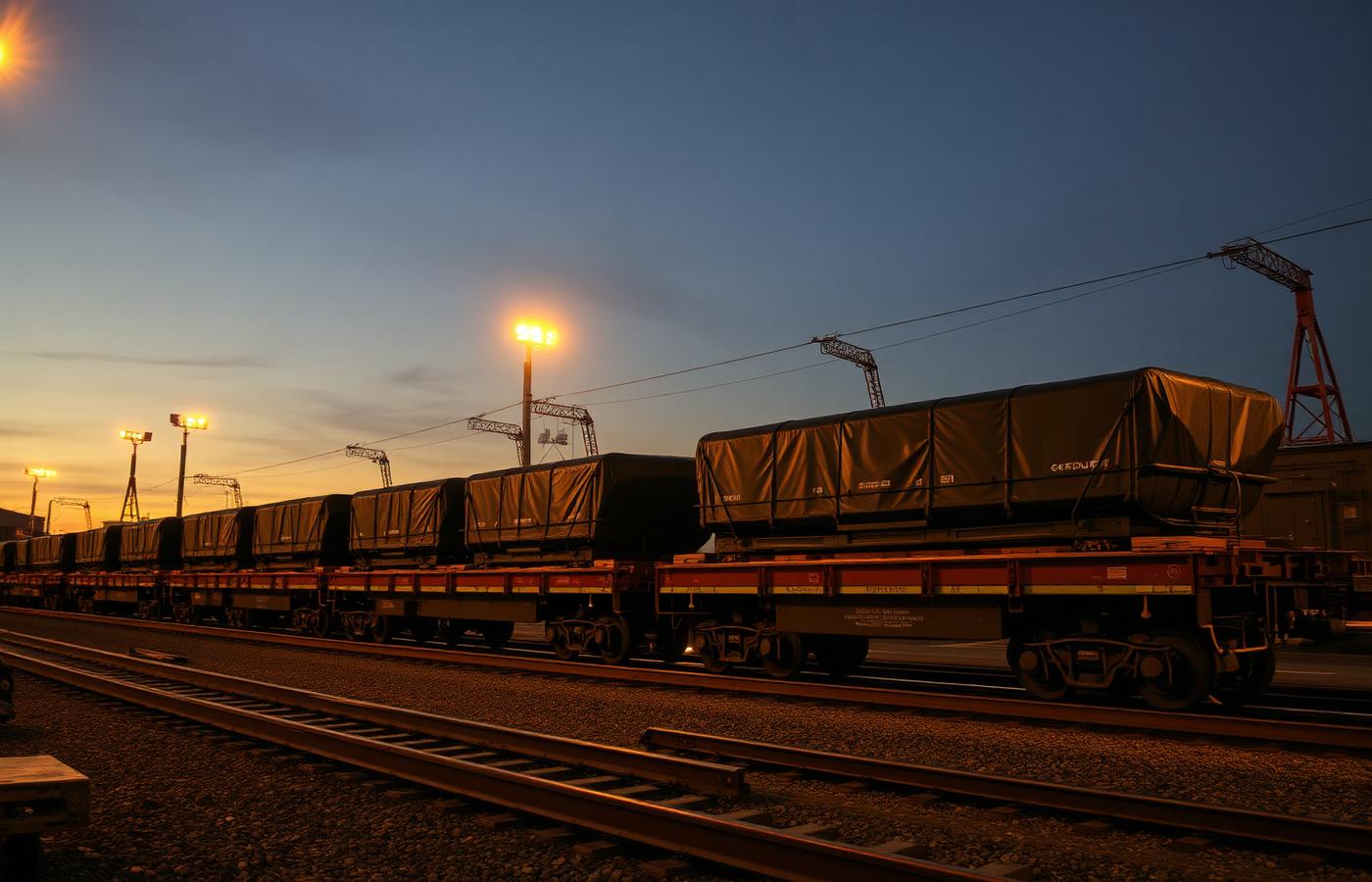
Rail carries high-volume and heavy cargo economically over long domestic distances. It is well suited to bulk materials, containers and large equipment that does not need door-to-door speed.
Rail is almost always paired with trucking. Drayage between the ramp and the origin or destination completes the move, which makes ramp scheduling and drayage capacity the real constraints on a rail plan.
How the modes work together
Most substantial requirements are intermodal. A shipment may begin as a truckload, move by rail across the country, transfer to a vessel, and finish with a final-mile delivery to the receiving point.
Each handoff is a risk point. Clean intermodal execution depends on confirmed appointments at every transfer, a single point of accountability, and one continuous record of the shipment rather than four disconnected ones.
Where a freight broker fits
A property broker with the required operating authority arranges transportation between the shipper and authorized motor carriers and mode partners. The broker does not operate the equipment; it verifies authority and insurance, matches the requirement to qualified capacity, plans the routing, tracks the movement and closes the file with complete delivery documentation.
Cox Logistics coordinates government, defense and commercial freight across these modes through vetted, authorized carriers. To discuss a requirement, request a freight quote or review our capability statement and procurement codes.